Going Dutch on Dates in Japan: What 1,148 People Really Think About Splitting the Bill
 Kona5 min read
Table of contents
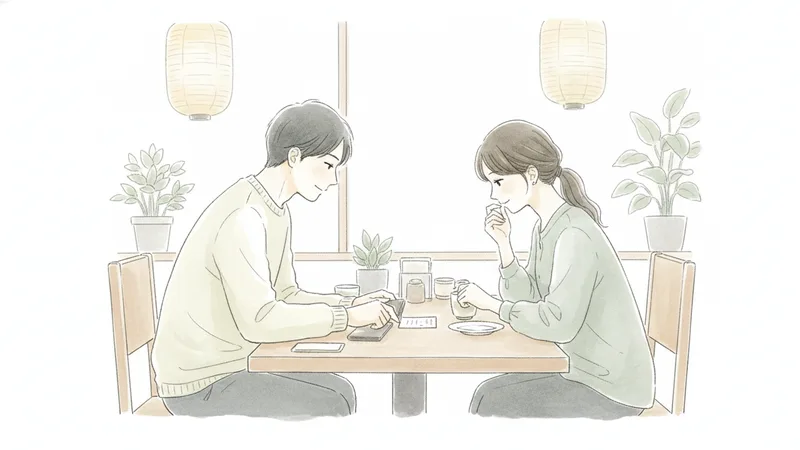
Who pays on a date? In Japan, this question carries layers of social expectation that can catch newcomers off guard. You reach for your wallet and wonder if you're being too forward, or too stingy, or reading the whole situation wrong. There's no rulebook, which is exactly why it gets awkward.
The short answer: what matters is whether you've talked about it
According to a 2025 survey by Nyle Inc. (1,148 respondents aged 20–40), 72.4% of men paid more than half or the full bill on a first date. Yet a separate 2024 ONE FOR ONE survey found that 57% of Japanese men actually prefer splitting the bill equally. Intentions and actions don't match, and that gap breeds resentment over time.
The amount matters less than whether two people have had even one conversation about how they want to handle it. Bringing it up feels awkward the first time. But "want to split from now on?" is one sentence that prevents months of silent frustration.
How far apart are men and women, really?
Start with the larger survey. Nyle Inc. polled 1,148 people aged 20–40 who went on a first date in 2024 (fieldwork January–February 2025). Here's how first-date payments broke down:
| Item | Men | Women |
|---|---|---|
| Paid more than half on the first date | 40.2% | — |
| Paid the full bill on the first date | 32.2% | — |
| Most common first-date budget | ¥10,000–20,000 (28.4%) | ¥5,000–10,000 (35.3%) |
Source: Nyle Inc. date expense survey (Jan–Feb 2025)
Meanwhile, ONE FOR ONE surveyed about 100 people in their 20s–30s in April 2024 (survey report): 57% of men said they would prefer to split equally, yet 72% actually paid more or covered the whole bill. Men want to split but feel they shouldn't — the pressure of not wanting to look cheap, especially early on. Women aren't necessarily expecting a free ride either. In the Nyle survey, women's budgets skewed noticeably lower than men's.
When one person is quietly overextending, the arrangement doesn't last.
Average date spending: men ¥6,805, women ¥2,612
The same ONE FOR ONE survey reported average and median spending per date.
| Average | Median | |
|---|---|---|
| Men | ¥6,805 (~$45) | ¥5,000 (~$33) |
| Women | ¥2,612 (~$17) | ¥2,000 (~$13) |
Source: Web Tan Forum / ONE FOR ONE survey (May 2024)
Men spend roughly 2.6 times more on average. Even at the median, the ratio is 2.5:1. The data confirms that men still shoulder the larger share of date costs in Japan, though this describes the current reality, not a prescription.
Nyle's age breakdown points the same direction: 45.1% of women in their 40s said their date covered the full bill, suggesting the expectation that men pay everything grows stronger with age.

What works in different situations
There's no universal formula, but some patterns cause less friction than others.
First dates (before you're official)
The person who invited typically pays more, or covers the whole thing. That's what 72.4% of men reported doing in the Nyle survey. What matters most on the receiving end is a genuine "thank you." That single phrase does more for the dynamic than any payment ratio.
Once you're dating
As things stabilize, many couples shift to splitting gradually. "We alternate who pays for meals" or "whoever picks the restaurant pays" are common setups. The split doesn't need to be perfectly even. It needs to feel fair to both people.
A simple starting rule
If you're not sure what to do, try alternating who pays for meals. No math required, and the balance evens out naturally over time.
Living together or long-term
At this stage, date expenses start blending with household costs. Rather than isolating "date money," it makes more sense to set up overall expense sharing. If there's an income gap, a proportional split avoids the resentment that 50/50 can create.
 Related readHow Couples Can Split Living Costs Without the Awkwardness
Three ways to split without making it weird
The reason splitting feels awkward isn't the money itself. It's the social friction around talking about money. A few small habits remove most of that friction.
1. Bring it up early
The longer you wait, the harder it gets. Mention it casually in the first few dates. More often than not, the other person is relieved someone said it first.
2. Don't sweat the exact numbers
Splitting to the last yen makes things feel transactional. A rough "about half" is the right temperature for date splitting. If your partner covers a little more this time, you get the next one. Keep it loose.
3. Settle on the spot
"I'll send it later" is where things go sideways. Whether it's a date or a group trip with friends, delayed settlements breed awkwardness. Use a payment app right at the table, or hand over cash before you leave. The longer the gap, the harder it is to bring up.
When to settle
Right after the check comes. "I'll transfer you later" risks being forgotten, and the person waiting feels uncomfortable chasing it up.
FAQ
Q. Is it rude to suggest splitting the bill on a date in Japan?
Suggesting a split is not rude. While 72.4% of men paid more than half or the full bill on first dates according to Nyle Inc.'s 2025 survey, 57% of men actually prefer equal splitting (ONE FOR ONE, 2024). It's about tone and timing. A casual "want to go halves from now on?" works perfectly fine.
Q. How should couples with different incomes split date costs?
A proportional split based on income ratio is the most practical approach. If one person earns roughly twice as much, splitting costs 2:1 instead of 50/50 prevents the lower earner from quietly struggling. See how to split living costs in proportion to income for the exact setup.
Wrapping up
The "right" answer to who pays on a date is whatever both people have agreed on. The data shows most men want to split but don't say so. That mismatch, left unaddressed, turns into quiet resentment.
On your next date, try a simple question: "how do you want to handle this going forward?" It's not about money. It's about checking that you're on the same page. Avoiding the conversation is always riskier than having it.