5 Rules to Lend Money to Friends Without Ruining the Relationship
 Kona5 min read
Table of contents

A friend asks to borrow some cash. You say yes without thinking. Then weeks turn into months, and you can't figure out how to bring it up without making things awkward. If that sounds familiar, you're not alone. Here are five rules that keep money from becoming a friendship problem.
The best rule: don't lend at all. If you must, set the amount, deadline, and method first
The safest approach to lending money between friends is not to do it. Japan's National Consumer Affairs Center has published youth-oriented guidance specifically on money lending between friends (NCAC advisory, in Japanese). One of the biggest causes of trouble is the psychological barrier to asking for your money back.
When lending is genuinely unavoidable, decide the amount, repayment deadline, and payment method before the money changes hands. These three points alone prevent most disputes.
Why does lending between friends go wrong?
Friends almost never put things in writing. Without a clear record, memories drift: "I thought it was ¥5,000, not ¥10,000." "I didn't realize you wanted it back this month."
The lender's side is equally painful. Nobody wants to look petty or damage a friendship over money. That hesitation kills the conversation before it starts.
Lending a friend ¥3,000 and realizing six months later that you can't bring it up anymore. It's a painfully common story. The amount doesn't matter. Ambiguity itself is what erodes trust.
CAUTION
Even a verbal agreement constitutes a legal contract under Japan's Civil Code (Article 587). But verbal agreements leave no proof. When things go wrong, only records can protect you.
5 rules to prevent money trouble with friends
Rule 1: Only lend what you can afford to lose
Start from the assumption that you might never see the money again. The right upper limit is the amount you can lose without resenting the other person.
Rule 2: Set a repayment deadline upfront
"Whenever you can" is the most dangerous phrase in friendly lending. Pick a concrete date: "by the end of the month," "next Friday." Setting a deadline alone makes it dramatically easier to follow up.
Rule 3: Use traceable payment methods
Cash hand-offs invite disputes about whether the money was returned. PayPay, LINE Pay, bank transfers, or any method that creates an automatic transaction record is a better choice. In Japan, mobile payment apps make this especially easy.
Rule 4: Put it in writing for amounts over ¥30,000
For anything above ¥30,000 (roughly $200), write it down. Even an informal note works. Details are in the next section.
Rule 5: Separate "splitting costs" from "lending money"
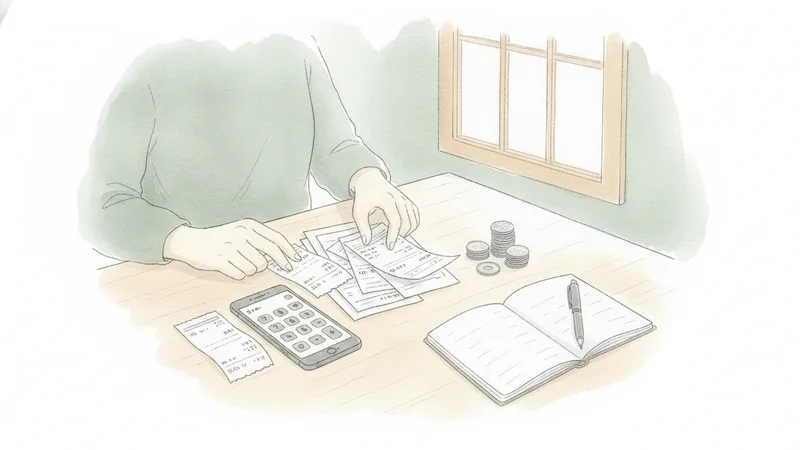
Collecting shares of a group dinner bill is a reimbursement, not a loan. Reimbursements should be settled on the spot. Leave them hanging and the other person may genuinely believe they already paid. The distinction matters.
 Related readIs Collecting Money for a Group Dinner a Taxable Gift? (Japan's Gift Tax, Explained)
POINT
If you remember only one rule, make it Rule 2: set a deadline. Once a date exists, following up becomes confirming a promise rather than demanding money. The other rules are easy to add later.
Is a written agreement overkill? No, it protects the friendship
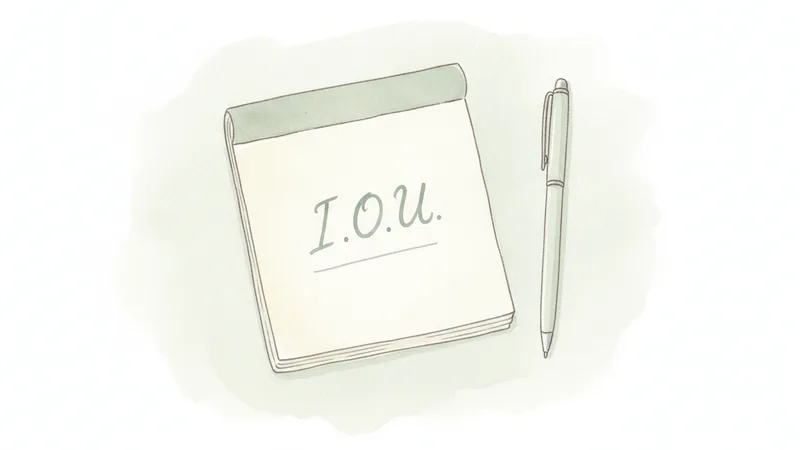
An IOU might sound dramatic, but the information you need fits in four lines.
| Item | What to write | Example |
|---|---|---|
| Date | The date money was handed over | July 4, 2026 |
| Amount | How much was lent | ¥50,000 |
| Repayment deadline | When it should be returned | August 31, 2026 |
| Signatures | Full names of lender and borrower | Taro Yamada / Hanako Sato |
No formal template is required. Type the four items into your phone's notes app and send them to each other on LINE or any messenger. That alone counts as a record.
Under Japan's Civil Code, Article 587 defines a loan for consumption (shōhi taishaku) as a contract that takes effect when one party receives money or goods and agrees to return the same kind and amount. In other words, the contract exists as soon as the money is handed over with an agreement to repay. The IOU doesn't create the contract. It preserves proof that the contract existed. "Writing it down feels excessive" is the wrong framing. "Writing it down lets me lend with peace of mind" is closer to the truth, and it protects both sides.
Source: Civil Code, Article 587 (e-Gov, Japanese)
What if they don't pay you back?
Start with a direct, calm conversation. In most cases, the friend either forgot or was too embarrassed to bring it up first.
If that doesn't work, legal options exist. Japan's Small Claims Court (shōgaku soshō) handles monetary claims of ¥600,000 or less (Courts of Japan - Small Claims). The table below shows how it works.
| Item | Overview |
|---|---|
| Eligible claims | ¥600,000 (about $4,000) or less, monetary claims only |
| Hearings | Usually completed in one session |
| Where to file | Summary Court (kan'i saibansho) |
| Cost | A few thousand yen (depends on claim amount) |
Keep in mind that going to court will almost certainly end the friendship. Treat legal action as a last resort and try to resolve things through conversation first.
The easiest way to stay out of the lender's seat altogether is to build some slack into your own budget. Realistic Money-Saving Tips for College Students covers practical ways to free up cash by tackling fixed costs first.
FAQ
Q. My friend won't return the money I lent. What can I do?
Start by bringing it up directly: "Hey, about the money from before." Most of the time they've simply forgotten. If they still don't pay, you can send a formal demand letter (naiyō shōmei yūbin). For claims of ¥600,000 or less, Japan's Small Claims Court resolves cases in a single hearing.
Q. Is a verbal loan legally binding in Japan?
Yes. Under Article 587 of the Civil Code, a loan for consumption is valid once money is delivered and repayment is agreed upon. No written agreement is required for the contract to exist. However, without documentation, proving the loan happened becomes very difficult. Keep chat logs, transfer receipts, or any other evidence.
Q. At what amount should I start putting things in writing?
There's no legal threshold, but ¥30,000 is a practical benchmark. Below that, a quick LINE message confirming the amount and repayment date offers enough protection. What matters most isn't the number on the bill. It's whether a record exists.
Summary
The most important thing about lending money to friends is to leave nothing vague. Set the amount, deadline, and method. Write it down when the numbers are meaningful. That alone eliminates most of the risk of money damaging a friendship. It takes about three minutes. Think of documentation as proof of trust, not proof of suspicion, and you'll find it's easy to do.
This article provides general information only and does not constitute individual legal advice. If you have concerns about a specific situation, please consult a qualified professional.
Related articles
Money Tips
How Much Can You Save in Your First Year Working in Japan? A Data-Driven Guide
July 4, 2026
Money Tips
How Much Does a Concert Trip Cost in Japan? A Guide to Saving and Splitting Travel Expenses
July 4, 2026
Money Tips
Your First Credit Card in Japan: 5 Things Students Should Know Before Applying
July 4, 2026