International Trip with Friends? Here's How to Handle the Currency Chaos
 Kona4 min read
Table of contents
Splitting costs on an international trip is genuinely tricky. By the time you're home, one person fronted the hotel in the local currency, another paid for airport snacks in USD, and everyone has a slightly different idea of the exchange rate they used. One small change in how you record payments makes the post-trip settlement surprisingly painless.
Why International Expense Splitting Is Harder
Two things make it harder than a domestic trip:
1. You're paying in multiple currencies
A single trip might involve local restaurant bills in won, a tour fee in USD, airport shopping in dollars, and a transport card topped up in baht. If you're not tracking each payment's currency at the time it happens, you'll be piecing it together from memory later — which never goes well.
2. Exchange rates shift day by day
The rate on day one of your trip isn't the same as day four. Deciding "which rate do we use?" becomes its own negotiation. Most groups end up picking one rate and calling it close enough — but that introduces small inaccuracies that someone will eventually notice.
The Core Concept: Paying Currency vs. Settlement Currency
The cleanest way to think about international expense splitting is to separate two things:
- Paying currency: What you actually handed over (KRW, THB, etc.)
- Settlement currency: What you settle up in at the end (USD, EUR, etc.)
Traditionally, groups had to agree on a rule — the trip's average rate, or the rate on the day everyone got home — and hope nobody objected. Today you can hand the conversion off to an app entirely. The simulation below shows how that plays out.
Full Simulation: 4 People, Seoul, 3 Nights
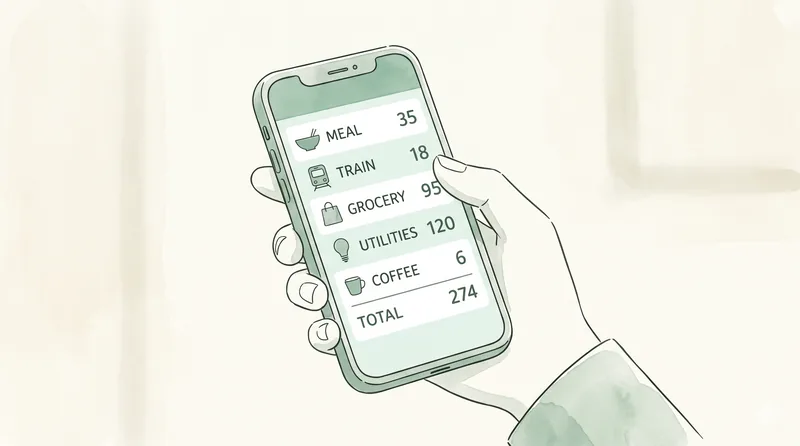
Here's how a real group might use WariSaku on a Seoul trip.
Group details
- 4 people: A, B, C, D
- Duration: 3 nights, 4 days
- Settlement currency: USD
Payments logged during the trip
| Item | Currency | Amount | Paid by |
|---|---|---|---|
| Hotel (4 people, 3 nights) | KRW | 440,000 | A |
| Dinner, night 1 | KRW | 96,000 | B |
| Sightseeing entry fees | KRW | 60,000 | C |
| Dinner, night 2 | KRW | 120,000 | D |
| Transportation (combined) | KRW | 48,000 | A |
| Lunch, day 3 | KRW | 80,000 | B |
| Duty-free shopping | USD | $80 | C |
Exchange rates are fetched automatically
Each KRW transaction is logged with KRW selected as the paying currency. WariSaku fetches the rate for that transaction's date and converts to USD, so nobody has to look up rates or negotiate an average.
Settlement result (approximate, based on exchange rates)
Total in USD: approximately $680. Split four ways: approximately $170 each.
| Person | Amount fronted (USD equiv.) | Fair share | Difference |
|---|---|---|---|
| A | ~$344 | ~$170 | +$174 (receives) |
| B | ~$127 | ~$170 | −$43 (pays) |
| C | ~$123 | ~$170 | −$47 (pays) |
| D | ~$85 | ~$170 | −$85 (pays) |
With WariSaku's minimum-settlement algorithm, B, C, and D each make exactly one transfer to A. Three transfers total — done.
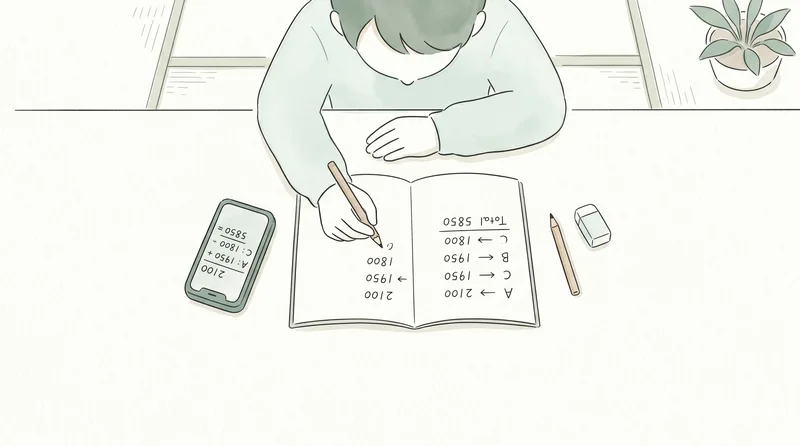 Related readLearn how the minimum-settlement algorithm works
If some of your group lives abroad, international wire fees can eat into the settlement. In that case, settling with crypto stablecoins is worth a look.
Log During the Trip or After — Both Work
During the trip (recommended for accuracy)
Logging at the time means you have the receipt right in front of you and the amount is exact. It also means everyone can see the running total in real time — no surprises at the end. Since anyone with the group URL can add entries, the person who paid something can log it themselves immediately.
After the trip (works, but save your receipts)
If you'd rather enjoy the trip without stopping to open an app, take a photo of every receipt and log everything when you get home. Credit card statements also help — the converted amount will show up there, and you can use that for accuracy.
Either way, the key is recording what was paid and by whom. Everything else is calculation.
Frequently Asked Questions
Q: What if we paid in two different currencies on the same trip?
Yes — just pick the paying currency for each transaction. A dinner paid in KRW and a souvenir paid in USD can both live in the same group, and everything ends up combined in your settlement currency.
Q: Is it too late to set up WariSaku after we're home?
Not at all. You can enter past transactions with their original dates, and WariSaku will fetch the historical exchange rates for those dates. As long as you have receipts or card statements, you can reconstruct the whole trip accurately.
Q: What happens to the group data after settlement?
The group stays accessible to anyone who has the URL. If you want to keep a record of the trip expenses, bookmark the URL. The data doesn't disappear after you view the settlement.
Wrap-Up
Before your next trip, set up the group, share the URL, and agree on one rule: whoever pays, logs it on the spot. With 16 supported currencies — including KRW, THB, and TWD — you can enter amounts in whatever you actually paid, and the math takes care of itself. A trip where the money question is settled in advance is simply a more relaxed trip.
 Related readThe complete WariSaku guide, from creating a group to settling up
Related articles
Travel & Events
Group Travel Made Easy: 3 Real Scenarios Where WariSaku Handles the Splitting
May 28, 2026

Travel & Events
Theme Park with Friends: The Smart Way to Split Every Ticket, Meal, and Souvenir
May 28, 2026

Travel & Events
Group Dinner Payments Without the Chaos: A Practical Guide for Organizers
May 28, 2026