Group Dinner Payments Without the Chaos: A Practical Guide for Organizers
 Kona4 min read
Table of contents
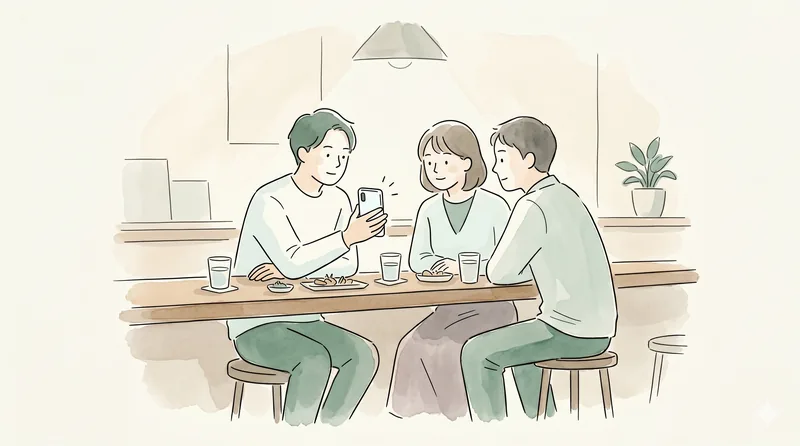
Organizing a group dinner is already a lot — picking a place, confirming headcount, managing the reservation. Then the bill arrives and suddenly you're also the group accountant, chasing down payments from eight different people in the days that follow. The fix comes down to three things you set up before anyone orders a drink.
Why Settlement Gets Complicated
Most dinner payment chaos comes from a few predictable situations that nobody bothered to think through ahead of time:
Late arrivals and early departures without a plan: If someone shows up halfway through and expects a discount on the spot, and you haven't agreed on how to handle that, you're improvising with real money.
Drinkers and non-drinkers paying the same: When the bill is split evenly and some people had several drinks while others had water, someone always feels the math isn't right — because it isn't.
No rounding rule: "Your share is $25.51" is a sentence nobody wants to hear, especially in cash. Agreeing on a rounding unit before the event saves everyone the awkward-change problem.
Decide these things before the dinner, not during.
Fixed Price vs. Split the Actual Bill
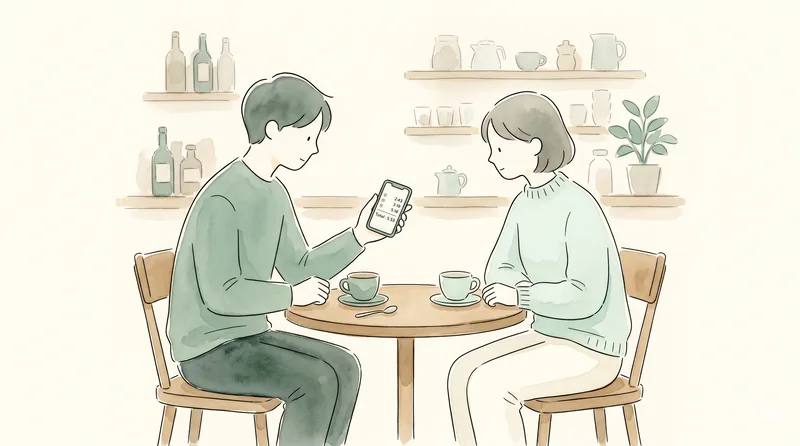
Two main approaches:
Fixed price per head (e.g., $35 flat): Collect before or at the door. Simplest for the organizer — no post-event chasing, minimal math. Works well for large groups or when you want to keep things tidy. Any surplus rolls over to next time.
Split the actual bill: Everyone pays their fair share of what actually got spent. More accurate, less chance of overpaying, but requires tracking and post-event collection. Better for close-knit groups where fairness matters more than convenience.
For groups of 10+, or when there are people who don't know each other well, fixed price is usually smoother. For smaller friend groups where people will be annoyed by overpaying, split-the-bill is better.
How to Run a Bill Split Smoothly
If you go with splitting the actual bill, work in three phases.
Before the Event
Create a WariSaku group, add everyone's names, and send the link to the group chat. No install required — they just open the URL.
Share these rules in advance (a single message in the group chat is enough):
- How late arrivals are handled (proportional to time, flat discount, or same as everyone else)
- Whether drinkers and non-drinkers pay the same or different amounts
- Rounding unit (nearest $1 recommended for digital payments; nearest $5 for cash)
Deciding this before anyone's had a drink is much easier than deciding it after.
At the Event
When the bill comes, the organizer pays the full amount and logs it in WariSaku: Paid by [organizer], $320, covers all 8 members. That's one entry. WariSaku calculates each person's share instantly.
Example: 8 people, $320 total, nearest-$1 rounding
Each person owes $40. The settlement screen shows who pays whom. Send a screenshot or share the group URL so everyone can see the breakdown themselves.
After the Event
With WariSaku's settlement view visible to everyone, most people will transfer their share the same night or the next day — especially if you set the expectation upfront. PayPay, Venmo, Zelle, and bank transfers all work fine. WariSaku doesn't care how people pay; it just tells them how much.
Handling Variations
Late Arrivals
Log the first portion of the bill as covering only the members who were there, then log the remainder as covering everyone. WariSaku calculates the late arrival's share based only on the time they were included.
Example: 8-person dinner, $320 total, one person arrived 2 hours late
- First 2 hours (estimated $100): covers 7 people, excludes the late arrival
- Remaining time ($220): covers all 8
Two entries. The late arrival's share comes out lower automatically. Everyone can see exactly how it was calculated — no "why am I paying this amount?" conversations.
Non-Drinkers
For a set-menu drinking package, equal split is standard. For à la carte ordering, WariSaku's weighted splitting covers it cleanly:
Example: 6 people, $240 total, drinkers vs. non-drinkers
| Member | Multiplier | Share |
|---|---|---|
| Drinkers (4 people) | ×1.5 | $54 each |
| Non-drinkers (2 people) | ×0.5 | $18 each |
Adjust the multipliers in the group settings before viewing the settlement. The amounts update automatically.
 Related readHow to set up weighted splitting (multipliers) in WariSaku
Frequently Asked Questions
Q: Someone cancelled last minute — do they still owe money?
That's up to your group's policy. Either way, WariSaku makes it easy to adjust who's included in each expense entry after the fact.
Set a cancellation rule upfront
Decide a deadline and an amount together — for example, "cancel within 48 hours and you still pay your share" — and announce it with the invite. A rule shared in advance leaves nothing to argue about on the day.
Q: What if the organizer changes for the next event?
Share the group URL with whoever's taking over. They can see the full history, understand how things were handled, and update it for the next event. No account transfer, no setup — just send the link.
Q: Is it okay to settle up a day or two later?
Yes. Everything is stored in the cloud, so the amounts don't change overnight. Settling the next morning when everyone's had a chance to review is often easier than doing it on the spot.
Q: What about cashless payment apps?
WariSaku tells everyone who owes whom and how much. How they transfer is up to them — PayPay, Venmo, Zelle, bank transfer, or even cash. You're not locked into any payment method.
Q: Is collecting a large amount as the organizer a tax problem in Japan?
No — collecting money to cover actual shared costs is held in trust, not a taxable gift. Just keep records that explain what the collection was for. See our guide to Japan's gift tax and expense splitting for details.
Wrap-Up
Next time you're organizing, create the WariSaku group and share the URL before the event starts. When settlement runs on a system instead of on you, the organizer finally gets to be a guest at their own dinner.
Related articles

Travel & Events
Group Travel Made Easy: 3 Real Scenarios Where WariSaku Handles the Splitting
May 28, 2026
Travel & Events
International Trip with Friends? Here's How to Handle the Currency Chaos
May 28, 2026

Travel & Events
Theme Park with Friends: The Smart Way to Split Every Ticket, Meal, and Souvenir
May 28, 2026